

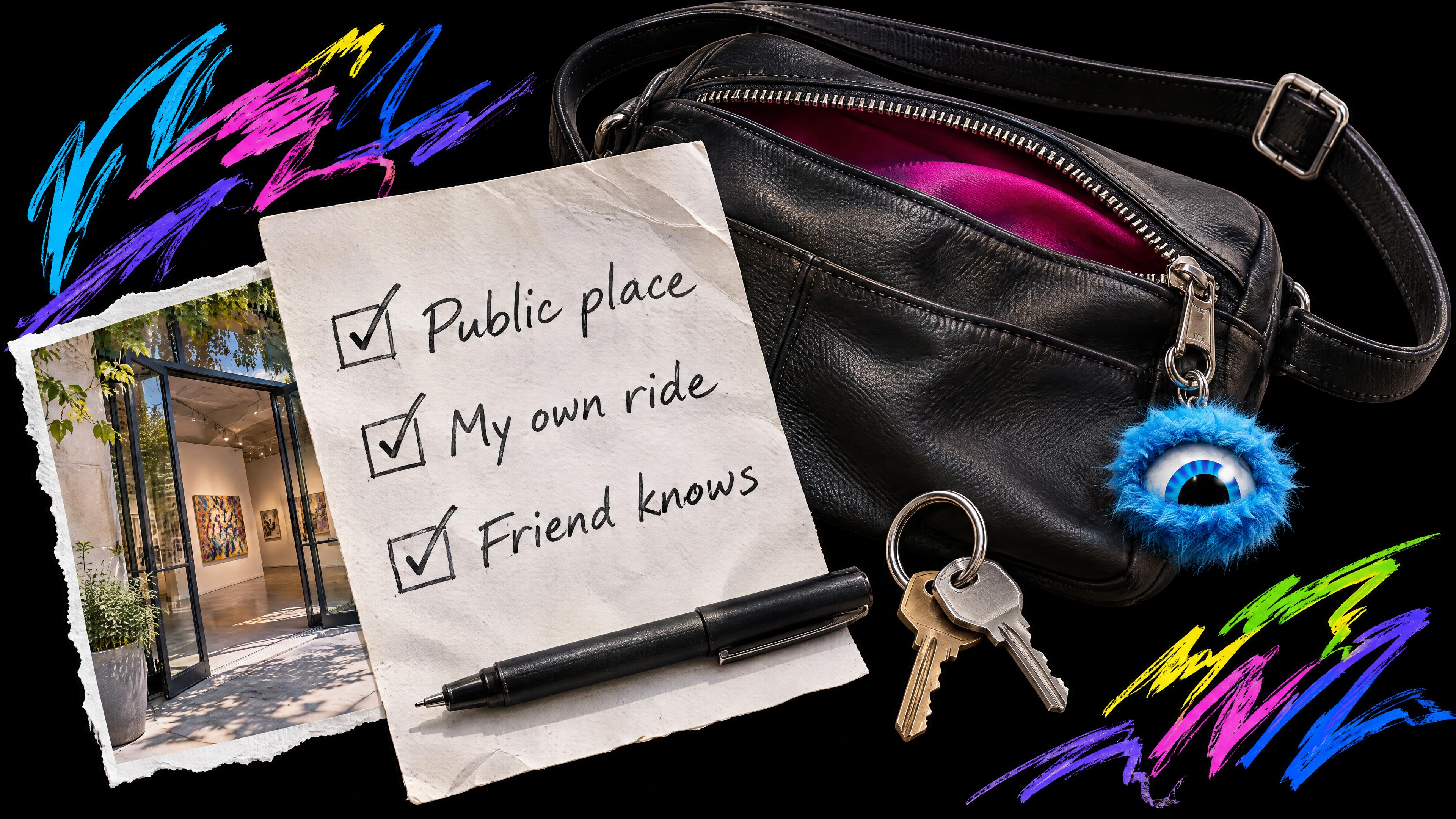
Before a first date with someone from an app, confirm a public meeting place, arrange your own way there and back, tell a trusted person the plan, and decide how you can leave if you want to. Keep your address and sensitive information private. You can postpone or cancel if you feel uncomfortable.
This checklist is for adults who have already discussed meeting and want to prepare. If you are still deciding whether you feel ready, start with our guide to how long to talk on a dating app before meeting.
These steps can reduce some risks and make your choices easier in the moment. They cannot guarantee safety, and another person’s harmful behavior is never your fault.
A quick check before you leave
The venue and meeting time are confirmed.
The location is public and likely to be populated while you are there.
You have transport home and a backup option.
Someone you trust knows the plan and when to expect a check-in.
Your phone is charged and you can pay your own way.
You feel free to change your mind.
RAINN’s safer dating guidance supports planning public meetings, independent transport, and contact with a trusted person. Use the sections below to turn those precautions into a plan that fits your circumstances.
Confirm the plan before traveling
A vague “see you later” is hard to prepare for. Agree on an actual venue, a time, and where you will meet within it. Check the venue’s official information yourself, including whether it will be open and accessible when you arrive.
You could write: “Are we still on for the museum at 2 on Saturday? Let’s meet by the main ticket desk.”
If you have a time limit, say so: “I can stay until about 3:30.” That gives the meeting a manageable shape without promising a second activity afterward.
If the plan has not been confirmed, do not feel obliged to travel there and wait. A brief “I haven’t heard back, so I’m making other plans today” closes the loop without an argument.
Choose somewhere you can leave independently
Pick a venue where other people will be present and where you can ask staff for help if needed. Look at the whole journey, including the route from the entrance to your transport. A place that is busy at lunchtime may feel very different after closing.
Arrange your own ride or route. If you rely on accessible transport, check availability and a backup before the day. Keep the first meeting separate from arrangements that would make you dependent on your date for getting home.
If they offer to collect you, you can say: “Thanks, I’ve sorted my transport. I’ll meet you there.” You do not need to explain your address or transport choices in detail.
If the venue changes, reassess the new plan. An invitation to a private home is not interchangeable with the public meeting you agreed to. It is reasonable to keep the original arrangement or cancel.
Give a trusted person a useful check in plan
Share who you are meeting, the venue, the meeting time, and when you expect to be in touch. If appropriate, share the profile information you have through a private channel. Avoid posting someone’s identifying details publicly.
Agree on what you want your contact to do if you miss the check-in. “I’ll text by 5; if you don’t hear from me, please call” is more useful than assuming they will know what to do. Use timing that suits the actual date, rather than a rigid rule for everyone.
Location sharing with a trusted person is optional. Discuss it first, check that it works, and review it afterward. The purpose is to support your plan, not to give a new date ongoing access to where you are.
Keep identity checks in perspective
A short call can help you decide whether you feel comfortable continuing. Ask rather than demand: “Would you be up for a quick video call before Saturday?” A call, familiar-looking photos, or a verification badge still cannot tell you how someone will behave in person.
Do not send identity documents to a new connection to prove that you are genuine. Be especially cautious with links asking you to pay for a background check or a “safe dating” verification before meeting. The FBI has warned about fake verification services that collect personal and payment information and enroll people in recurring charges.
Use official app or website routes to check any supposed requirement. If the person keeps pressuring you to use their link, you can stop the conversation. Our guide to spotting fake or AI-generated dating profiles explains why a photo alone cannot settle authenticity.
Do not pay to rescue a meeting
Be cautious if a planned date turns into an urgent request for money for transport, a ticket, an emergency, or an investment. An arrangement to meet is not proof that the person is trustworthy.
The FTC’s romance scam guidance advises against sending money or gifts to a romantic interest you have not met in person. Stop and talk to someone you trust if you are being pressured to pay. Meeting once also does not make later financial requests safe.
You can keep the response simple: “I’m not sending money. Let’s cancel the plan.” You do not need to negotiate the request or prove that it is a scam before deciding not to participate.
Prepare a way to end the date
Before leaving home, think of a sentence you can use if you want to finish early: “I’m going to head out now. Take care.” You do not owe a longer explanation, another venue, or physical contact.
Stay aware of your surroundings, keep control of your belongings, and avoid leaving food or drinks unattended. If you feel unsafe, ask venue staff or a trusted person for help leaving. Love is respect’s guidance on meeting people while traveling includes practical advice on leaving an uncomfortable meeting; it is relevant to dates close to home too.
If you face immediate danger in the United States, call 911. You do not need to remain in a situation to gather evidence or finish an explanation.
Check in afterward and decide what comes next
Let your trusted contact know you are back or that your plans have changed. If you enjoyed the meeting, you can say so. If you do not want another date, “Thanks for meeting. I don’t feel the connection I’m looking for, so I’m going to leave it here” is enough.
For harassment or suspected fraud, use the app’s reporting tools. Save relevant messages or profile details if it is safe to do so, then stop contact. If you sent money to a suspected scammer, contact the payment provider promptly and report the incident through the FTC’s fraud reporting service.
For Wink-specific information, read Is Wink Safe and the current official safety page. App safeguards support your choices; they do not replace the ability to set boundaries and leave.
Common questions before a first date
Does a verified profile mean I can skip precautions
No. Verification is not a guarantee about someone’s intentions or future behavior. Keep your meeting plan, privacy boundaries, and transport arrangements in place.
What if my date says the precautions show I do not trust them
You can explain that these are your usual arrangements: “I meet new people in public and organize my own ride.” You do not need their permission to keep a boundary. If they keep pushing, you can cancel.
Can I cancel after agreeing to meet
Yes. Agreeing to a date does not remove your choice to change your mind. If you feel comfortable communicating, send a short cancellation. If you feel unsafe, prioritize getting help and ending contact over writing the perfect message.
👉 Download Wink to explore connection with honesty, warmth, and ease.