

There is no universal number of days you should talk on a dating app before meeting. Consider a first date when the conversation feels mutual, you both want to meet, and you can agree on a plan you feel comfortable with. More messages can help you learn about someone, but time spent chatting does not establish that they are trustworthy.
You might enjoy a conversation and still want another few days. You might be ready to suggest coffee while the other person prefers a call first. Both situations leave room for a clear, respectful conversation about what happens next.
Look at the conversation rather than the calendar
“We have been talking for a week” can mean several thoughtful exchanges or a handful of late-night replies. The number of days tells you little about what you have actually learned.
Before suggesting a date, consider whether you know something about the person's interests, what they are hoping to find, and how they respond when you express a preference. You do not need to cover your entire relationship history. You do need enough of an exchange to decide whether you want to spend time together.
RAINN's safer-dating guidance recommends taking your own time and meeting when you feel ready. It does not set a universal waiting period. Someone else's preferred timeline should not become a deadline you feel obliged to meet.
If the conversation has barely moved beyond introductions, our guide to keeping a dating app conversation going can help you explore a shared interest before proposing plans.
Check whether you both want the next step
These questions can help you decide whether to invite someone out:
Are you interested in meeting them, beyond wanting to keep the chat from disappearing?
Do you both contribute to the conversation, even if your messaging styles differ?
Can you express a preference or boundary without being argued with?
Are your dating intentions compatible enough that a first meeting makes sense?
Can you agree on a practical place and time without pressure?
Treat these as reflection questions. They are not a screening test that proves someone is safe or predicts chemistry.
You also do not need certainty that the connection will become a relationship. A first date can simply help you discover whether you enjoy talking in person. Each person can decide afterward whether they want another one.
Suggest a specific first meeting
A useful invitation gives the other person something concrete to accept, adjust, or decline. Choose an activity that leaves room to talk and does not require a large commitment of time or money.
For example:
“I've enjoyed talking about our very different movie opinions. Would you like to get coffee Saturday afternoon? We could meet at a café near the downtown library.”
Or:
“I'd like to continue this in person. Would an early dinner on Thursday work for you? Happy to find another day if it doesn't.”
These are original examples to adapt. Offer a time you can actually keep, and check the venue together before confirming. A short coffee date can be enough; you do not need to turn the first meeting into an entire evening.
If a call would help you feel more comfortable, you can suggest one:
“I'm interested in meeting. Would you be up for a short call first, or would you rather keep chatting here a little longer?”
A call gives you another way to communicate. It does not guarantee someone's identity, intentions, or behavior. You can also decline a call or avoid sharing your phone number before you are ready.
Say clearly when you want more time
You can be interested and still prefer to wait. A direct answer is often easier to understand than repeatedly saying that you are busy.
“I'd like to keep getting to know you. I'm not ready to meet yet, but I'd be happy to keep talking here.”
If a particular condition would help, name it:
“Coffee sounds good eventually. I'd feel more comfortable having a call first.”
If you are no longer interested, you do not need to promise a later date:
“Thanks for asking. I don't think I want to take this further, but I wish you well.”
When you receive a decline, accept it. “Of course, no pressure” leaves room for a voluntary conversation. Repeated invitations or demands for an explanation do not make the decision more mutual.
Notice pressure and repeated uncertainty
Slow down or stop if someone dismisses your boundaries, insists on a private meeting, or turns your wish to wait into an accusation. You do not need to keep negotiating a plan that makes you uncomfortable.
Repeated postponements are different from direct pressure. Work, caregiving, health, distance, and limited money can all affect availability. A delay alone does not prove dishonesty. You can still decide that an indefinite chat is not what you want.
Try one clear check-in:
“I'm enjoying talking, and I'm looking to meet in person when we're both comfortable. Is that something you want too?”
If they want to meet but cannot offer a date yet, you can agree to reconnect when their schedule settles. If every suggestion stays vague, stepping back is reasonable. You do not have to establish someone else's motive before setting your own limit.
Money requests need a different response. The Federal Trade Commission's romance-scam guidance describes requests for travel costs and emergencies after trust has been built online. Do not send money or gifts to someone you have not met. Suspected scams should be reported to the platform and the FTC.
Make the first date easy to attend and leave
Once you agree to meet, confirm the plan rather than leaving the details for the last minute. Published dating-safety guidance supports the following precautions:
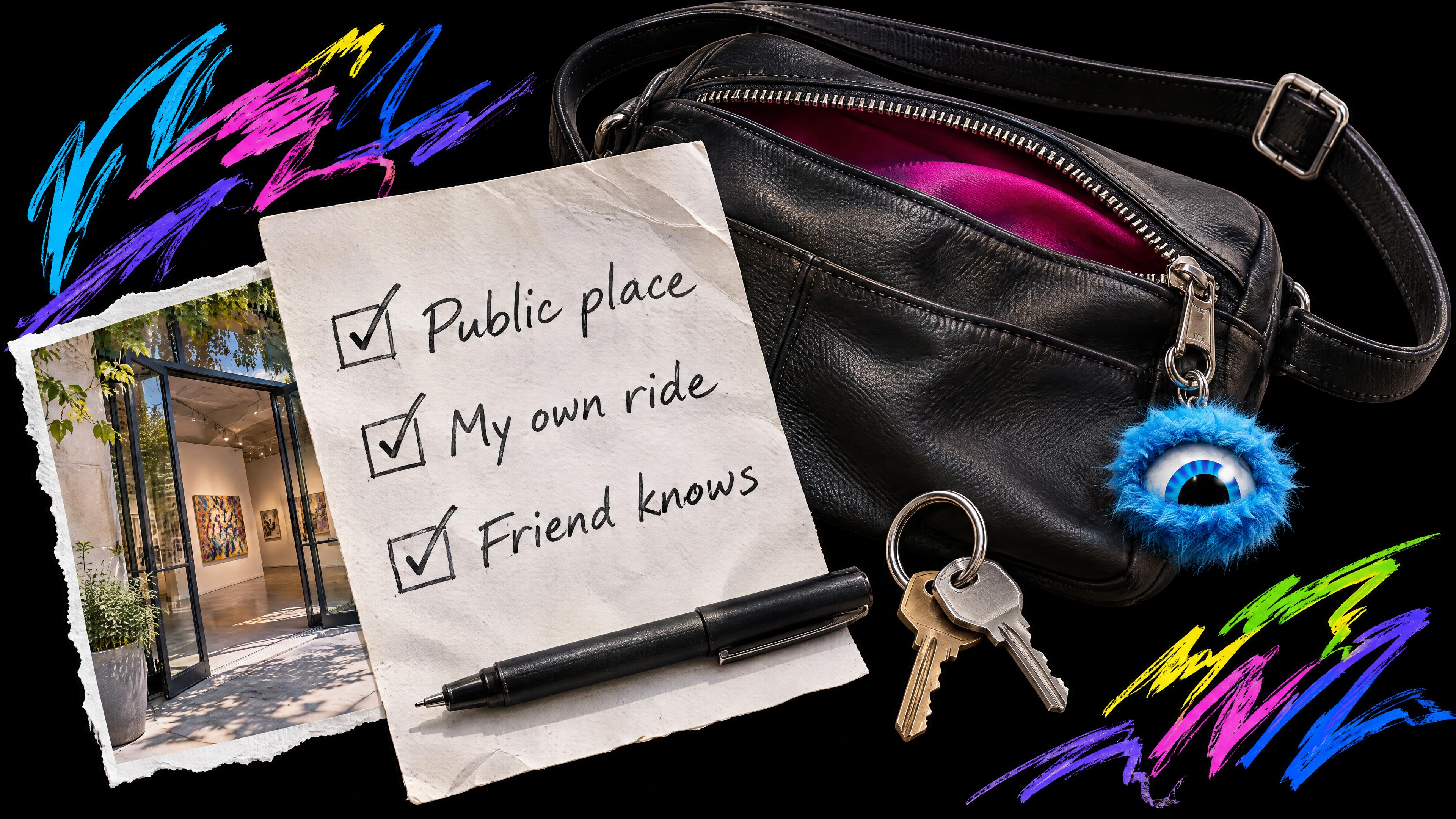
Choose a busy public venue and stay in public for the meeting.
Tell someone you trust who you are meeting, where, and when.
Arrange transportation you control and have a way to leave independently.
Keep your phone charged and accessible.
Leave if you feel uncomfortable or someone pressures you to change the plan.
For example, “Let's meet inside the café at 3. I have about an hour” establishes both a meeting point and a manageable expectation. Check opening hours and any accessibility needs in advance.
Precautions can reduce some risks, but they cannot guarantee safety. Another person's harmful behavior is their responsibility, regardless of how long you chatted or which precautions you took.
Common questions about meeting a dating app connection
Is meeting after two days too soon?
Two days alone cannot answer that. Consider what you have learned, whether you genuinely want to meet, and whether the plan respects both people's comfort. If you feel rushed, wait. There is no obligation to match the other person's pace.
Is several weeks of chatting too long?
Not necessarily. Distance and personal circumstances can make a longer conversation practical. If you want an in-person connection, discuss whether that is a shared goal. Several weeks of messages do not create an obligation to meet or establish that someone is safe.
Do you have to exchange phone numbers before a first date?
No. You can keep arranging the meeting through the dating app if that suits you. Agree on a clear meeting point and how to communicate if plans change. Share contact information only when you choose to.
When you are ready to meet someone new, explore Wink. Bring the same approach to every connection: express interest clearly, respect the other person's pace, and choose a next step you both want.
👉 Download Wink to explore connection with honesty, warmth, and ease.