

Some Gen Z daters are questioning traditional dating apps because the experience can feel repetitive, impersonal, and difficult to trust. Research points to frustration with endless choice, pressure to present a perfect dating life, and conversations that lack depth. But the evidence does not show that an entire generation has abandoned online dating. [1][3][4][5][6]
This article focuses on adults in the United States. Here, traditional dating apps means services centered on browsing profiles, liking or swiping, and messaging matches. Individual studies use different age ranges for Gen Z, so their results should not be treated as interchangeable.
Is Gen Z actually leaving dating apps
A nationally representative SSRS survey of 2,012 U.S. adults, conducted in January 2026, found that 51% of adults ages 18–29 had used a dating site or app and 10% were currently using one. That shows substantial experience with online dating. It does not mean the other 90% quit: current nonusers include people who never joined and people who are no longer looking. [1]
The industry picture is mixed, too. Match Group reported that Hinge’s global monthly active users grew 13% year over year in the second quarter of 2026, while Tinder’s daily active user metric declined 4%. These are different measures, and neither isolates U.S. Gen Z. They do show why a claim that all dating apps are losing their audience would be misleading. [2]
The research below helps explain why some dating experiences leave people dissatisfied and what could make meeting people feel more worthwhile.
Why traditional dating apps can feel disappointing
1. Endless choice can make connection feel like shopping
In The Harris Poll’s February 2026 Modern Dating Survey, 72% of U.S. adult respondents agreed that dating apps had made dating feel more transactional than romantic. This was a finding about adults overall, rather than a Gen Z-only result. [7]
Older experimental research offers one possible explanation. In a peer-reviewed study published in 2020, Tila Pronk and Jaap Denissen found that participants became increasingly likely to reject potential partners as they reviewed more options across three studies. The work was not specific to today’s Gen Z, but it helps explain how abundant choice can become counterproductive. [3]
Consider a familiar situation: you enjoy someone’s profile, then keep browsing because another person might be a slightly better fit. When comparison becomes the main activity, it leaves less attention for getting to know an individual. A useful personal question is whether browsing is leading to conversations you actually want to continue.
2. A match does not automatically create a meaningful conversation
Hinge’s November 2025 Gen Z D.A.T.E. Report found that 84% of its Gen Z respondents wanted new ways to build deeper connections. The report drew on roughly 30,000 Hinge daters worldwide across age groups; its Gen Z findings describe that app’s surveyed users, not every young American. [4]
An introduction only gets people so far. Repeating the same opening questions, receiving vague replies, or chatting without agreeing on what comes next can make dating feel like work. Someone can want a relationship and still be tired of the process used to look for one.
A more useful exchange starts with something specific: a shared interest, a question about a profile detail, or an honest conversation about what each person is looking for.
3. Dating can feel like something to perform for other people
The pressure does not come only from dating apps. Hily’s 2026 Dating T.R.U.T.H. Report, based on a December 2025 survey of more than 3,000 Gen Z Hily daters in the U.S., found that two in five worried they seemed less socially attractive because they did not go on enough dates. [5]
That is evidence of pressure within one app’s user sample, rather than a national estimate. Still, it highlights a useful distinction: wanting to meet someone and feeling that your dating life must impress an audience are different goals. A quiet coffee date can be worthwhile even if it would make an unremarkable social media post.
4. Trust takes effort and AI adds another question
Safety concerns predate the current debate about AI. Pew Research Center’s 2023 report, based on a 2022 U.S. survey, found that 56% of women under 50 who had used dating sites or apps had received unwanted sexually explicit messages or images. That is historical context, not a 2026 rate or a Gen Z-specific statistic. [6]
More recently, 75% of single respondents in The Harris Poll’s 2026 survey said AI made it harder to trust what they saw in online dating profiles. That measures a concern about authenticity; it does not measure how many profiles actually use AI. [7]
For someone deciding whether to keep using an app, the effort of assessing authenticity and handling unwanted contact may matter as much as finding attractive profiles. Clear reporting tools, respectful behavior, and honest self-presentation are relevant parts of the experience.
5. Meeting through a shared activity offers more context
An interest in meeting offline can coexist with using apps. In Hily’s survey, 62% of Gen Z women and 55% of Gen Z men said they were open to in-person romantic meetings. Openness is not evidence that they have already moved their dating lives offline. [5]
A class, a friend’s gathering, or a hobby group gives people something to talk about before they decide whether there is romantic interest. It also provides a chance to observe how someone interacts with others. Those are practical reasons to try shared activities alongside online introductions, without assuming that either route guarantees compatibility.
What to try if dating apps are wearing you out
Start by identifying the part that is draining you. Too much browsing, conversations with mismatched intentions, and discomfort about authenticity call for different changes.
Make your intentions visible. Describe the kind of connection you want and ask about the other person’s expectations early.
Choose conversations you can give attention to. A smaller number of exchanges may be more manageable than trying to maintain every match.
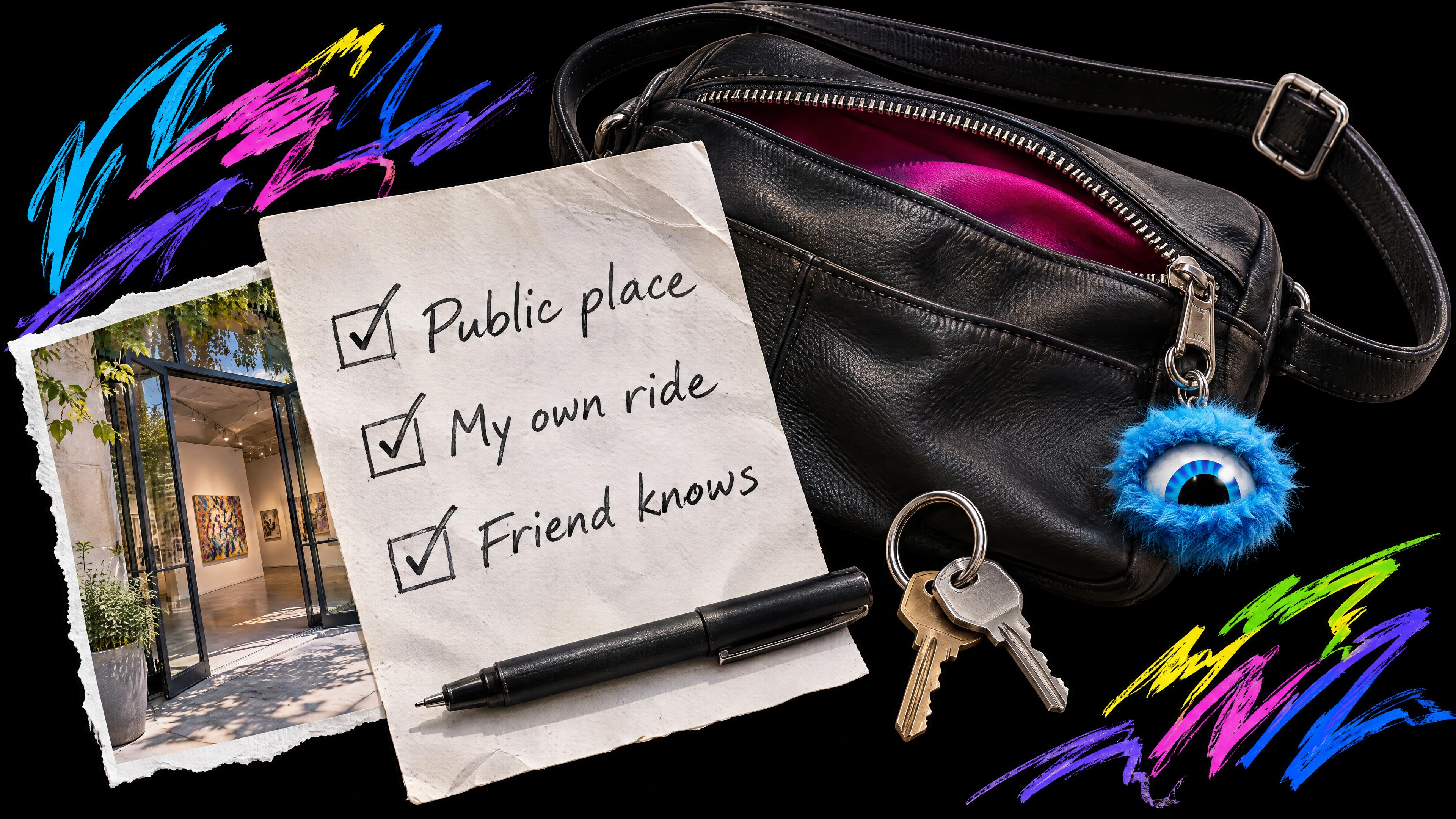
Use a specific next step. When interest is mutual and you feel comfortable, suggest a brief call or a public first meeting instead of continuing indefinitely by text.
Leave room for other ways to meet. Join activities you would enjoy even if you did not meet a date. Take an app break when you want one.
These are practical options, not a proven formula for finding a partner. Judge an approach by whether it helps you have interactions you value.
Where Wink fits
Wink is an AI-powered dating and social discovery app for adults. Wink AI uses the interests and preferences you share to help suggest connections and conversation starters. You decide which connections to pursue. [8]
If starting a conversation is the difficult part, that kind of assistance may be useful. Getting to know someone still requires your own words, judgment, and time together. Explore Wink to see whether its approach fits how you want to meet people.
Frequently asked questions
Why is Gen Z rejecting traditional dating apps
Some young daters are frustrated by repetitive browsing, shallow conversations, social pressure, and trust concerns. Those themes help explain dissatisfaction, but current surveys do not prove that all Gen Z adults are rejecting apps or that one factor causes people to leave. [3][4][5][6]
Does Gen Z still use dating apps
Yes. SSRS found that 10% of U.S. adults ages 18–29 were currently using a dating site or app in January 2026, and 51% had used one at some point. Those percentages cover all adults in that age group, including people who are partnered or not looking. [1]
Are dating apps dying
The evidence does not support a blanket claim. In the second quarter of 2026, Match Group reported growth in Hinge’s global monthly active users alongside a decline in Tinder’s daily active user metric. Results differ by platform, and business metrics do not directly explain one generation’s choices. [2]
Can AI make dating feel more authentic
AI can help suggest an opening question, but authenticity depends on whether your profile and conversation reflect you. A useful boundary is to review suggestions in your own voice and be clear when someone is interacting with AI. Assistance cannot guarantee chemistry or a lasting relationship.
👉 Download Wink to explore connection with honesty, warmth, and ease.